"...the Imagination (or love, or sympathy, or any other sentiment) induces knowledge, and knowledge of an 'object' which is proper to it..."
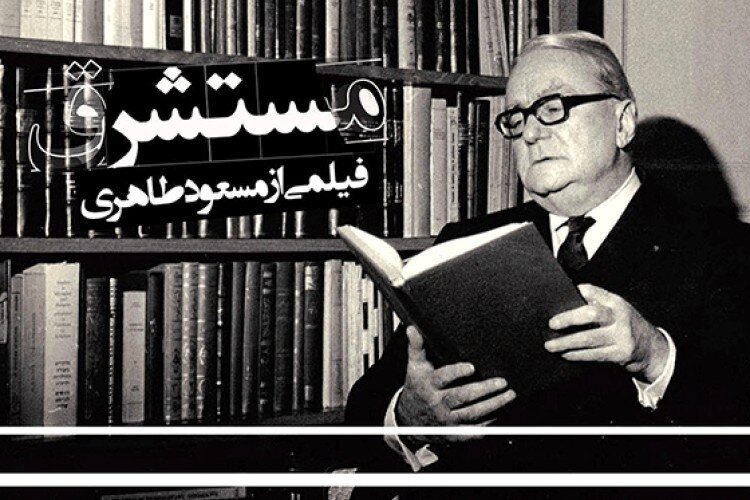
Henry Corbin (1903-1978) was a scholar, philosopher and theologian whose work is profoundly significant for the contemporary world. He was a champion of the transformative power of the Imagination and of the transcendent reality of the individual in a world threatened by totalitarianisms of all kinds. One of the 20th century’s most prolific scholars of Islamic mysticism, Corbin was Professor of Islam & Islamic Philosophy at the Sorbonne in Paris and at the University of Teheran. He was a major figure at the Eranos Conferences in Switzerland. In addition to his prodigious output as a scholar of Islam, he was the first French translator of both Martin Heidegger and Karl Barth. He introduced the concept of the mundus imaginalis into contemporary thought and his work has provided much of the intellectual foundation for archetypal psychology as developed by James Hillman. But Corbin’s central project was to provide a framework for understanding the unity of the religions of the Book: Judaism, Christianity and Islam. His great work Creative Imagination in the Sufism of Ibn ‘Arabi is a classic initiatory text of visionary spirituality that transcends the tragic divisions among the three great monotheisms. Corbin’s life was devoted to the struggle to free the religious imagination from fundamentalisms of every kind. His work marks a watershed in our understanding of the religions of the West and makes a profound contribution to the study of the place of the imagination in human life.

Search The Legacy of Henry Corbin: Over 190 Posts (and the Web)

Loading...

Friday, December 11, 2009

Roberts Avens: "James Hillman: Toward a Poetic Psychology"


"James Hillman: Toward a Poetic Psychology" by Roberts Avens. Journal of Religion and Health Vol 19, No 3, Fall 1980, 186-202. Although this particular piece has limited references to Corbin, it does deal with Corbin's and Hillman's uses of the imaginal, and it is important as part of Avens' total project. It is part of my continuing series of hard-to-find papers by Avens whose work on Corbin is of particular importance.

Photo: James Hillman
Roberts Avens - 'James Hillman - Toward a Poetic Psychology'

Thursday, December 10, 2009

Becoming an Angel


"Becoming an Angel: the Mundus imaginalis of Henry Corbin and the Platonic path of self-knowledge." (pdf)

by Angela Voss

A paper given at the Jupiter Trust, Oxford, England, Nov. 10th 2007.

And be sure to see Cosmology & Divination with a wealth of most interesting material and links.

Additions to the Bibliography

1. Corbin's translations of Heidegger in the 1930's include "Hölderlin and the Essence of Poetry" which appeared as «Hölderlin et l’essence de la poésie», trad. de l’allemand par H. Corbin, Mesures 3, 15 juill. 1937, pp.  120-143. This was reprinted in 1962 as Heidegger, Martin. Approche de Hölderlin. Translated by Henry Corbin et al. Paris: Gallimard, 1962. 

2. Landolt, Hermann. “Henry Corbin’s Understanding of Mulla Sadra.” In Mulla Sadra and Transcendent Philosophy (Islam-West Philosophical Dialogue: The Papers Presented at the World Congress on Mulla Sadra, May, 1999, Tehran), 1: 163-72. Tehran: SIPRIn, 2001; reprinted in idem, Recherches en spiritualité iranienne, 357-64.


Folio of calligraphy 16th century Mir 'Ali, d. 1556 Safavid or Mughal periods, Iran.

Wednesday, December 9, 2009

Corbin and the History of Philosophical Thought in Iran


Corbin and the History of Philosophical Thought in Iran by Mohammad Mehdi Khalaji.
In Iran Nahmeh Vol XX, Number 4. (From the Foundation for Iranian Studies) Abstract in English below - full text in Persian only. It would be useful to have this piece translated into English if there is anyone out there willing to do so.

"Among the Iranian scholars of the Twentieth century, Henry Corbin has had the most philosophical approach to Iran. Contrary to the prevalent trend of the period, he does not consider Iran as a specific geographic or historic entity within a broader cultural sphere. For him, Iran is a philosophical object, a world representing and bespeaking of a unique cultural phenomenon which is governed by its own internal imperatives nurturing its unity and insuring its diverse manifestations. Esotericism, which has forever marked the Iranian cultural existence, is the quintessential feature of this world. It is on this fundamental assumption that Corbin has attempted to narrate the history of Iranian thought or Islamic philosophy. The imagined world, although beyond the natural universe and independent of time and history, is still a real world. Thus, Corbin is writing the history of an ahistorical idea and hence his rejection of historical specificity in dealing with Iranian philosophical thought.

This article attempts to bring into light Corbin's deep structure of the history of Iranian thought. It strives to analyze those concepts and assumptions that have formed the basis of Corbin's philosophical project for understanding Iran. It is the author's suggestion that Corbin's concern is not with Iran per se. He simply poses the essential problem that had preoccupied Europeans in the aftermath of the Second World War, i.e., how to prevent the recurrence of the calamities that had befallen them in the twentieth century by the emergence of Fascist and Communist regimes. In Corbin's view the emergence of such political orders had very much to do with Europeans' understanding of history. For him, ideology is the byproduct of the philosophy of history rooted in the age of Enlightenment. In a sense, ideology is the child of modernity, itself nineteenth century rationalism which is no less than the positivism that emanated from the secularization of history.

It is in his critique of this chain of ideas that Corbin attempted to find a philosophical solution for the amoral violence of the twentieth century. His understanding of the Islamic world led him to believe that Islam was on the verge of an ideological metamorphosis. Indeed, he clearly foresaw the emergence of a fundamentalist movement in the Islamic world. For him, the only way that Islam could spare itself the fate of Christianity was to avoid secularization. According to Corbin only Iranian Islam with its old, lasting and lively esotericism, could foreclose such a possibility. The Iranian revolution that occurred only a year after his death, is a clear invitation to revisit Corbin's prophecies."

Tuesday, December 8, 2009

A Charter for Comparative Spiritual Hermeneutics

At Eranos in 1965 Corbin spoke as follows:

"...[I]f not only a general theology of the history of religions but also a general theology of religions is necessary and conceivable; it cannot be established either as a synthesis or as a process of the "historical past." It is not feasible, in one form or another, except as a theology or a theosophy of the Paraclete. This begins when our bondage to the unidimensional and linear perspective of the consciousness called "historical" ceases. What we have called here hierohistory is the appearance of a hieratic dimension, heterogeneous to our historical time; the time of this hierohistory is the one that we have seen Swedenborg analyze as a succession of spiritual states, and the events that are visions— those of Isma'ili hierohistory, for example, or those that fill our cycle of the holy Grail—are true and actually take place 'in that time.'


If the grand task of a general theology of religions was ever foreseen, it was surely by the great Protestant theologian of German romanticism, Schleiermacher, himself a master of hermeneutics. If he is scarcely to the taste or in the style of our time, this is perhaps owing to a symptom not only of dryness of heart in our theologies, but of resignation, of secret agnosticism, which insists that one should be more attentive to questions that are, in fact, at the level of sociology, even when they bear the name of ecumenism. In a striking page of his On Religion, a page totally inspired by the verses in John concerning the Paraclete, Schleiermacher professes that if, since the flowering of the first Christianity has passed, the Sacred Scriptures, the Bible, have come to be considered a closed code of religion, it is because it has been claimed that limits can be imposed on the boundless freedom of the Holy Spirit. In fact, it would be necessary to make it appear dead, and for that it would be necessary that religion itself—a divine work, not a human one—should be dead. Schleiermacher would not have spoken otherwise if he had been, like us, witness to the efforts of the theologians who have made themselves the accomplices of that death, by affirming, under the pretext of safeguarding the divine transcendence, that Christianity is not a religion and by obstinately repeating that religion is only the work of man—as though man could be capable of this effort at salvation without God being its active Subject.

In contrast, Schleiermacher proclaims:

"All those who have still felt their life in them, or have perceived it in others, have always declared themselves against that innovation which has nothing Christian in it. The Sacred Scriptures became the Bible by means of their own power; they do not forbid any other book to be or to become the Bible; they would willingly allow anything written with the same power to be added." (On Religion - 5th Discourse).

This page of Schleiermacher could be the charter of all future comparative spiritual hermeneutics."

- Henry Corbin

in « Herméneutique spirituelle comparée : I. Swedenborg, II. Gnose ismaélienne », Eranos-Jahrbuch, XXXII/1964. Zurich, Rhein-Verlag, 1965. Repris dans Face de Dieu, face de l’homme – Herméneutique et soufisme. Entrelacs, 2008 (orig. Paris, Flammarion, 1983). Translated in English as "Comparative spiritual Hermeneutics," in Swedenborg and Esoteric Islam, by L.Fox. West Chester, Swedenborg Foundation, 1995. Selection here from pp. 132-134.

Monday, December 7, 2009

Epistle on the State of Childhood - Sohravardi


"Epistle on the State of Childhood," by Sohravardi. Translated from l'Archange Empourpre, Fayard, Paris, 1976, by Liadain Sherrard. With Introduction, Presentation and Notes by Henry Corbin. From Temenos 4, 1983. (This is not, I fear, a particularly good copy - if I obtain a better one I'll replace it.)

Photo of a Zoroastrian temple in Iran - copyright by Zohreh Soleimani. See his beautiful photos at Zoroastrians in Iran.
Epistle on the State of Childhood - Sohravardi

Sunday, December 6, 2009

Book of Omens

I have just got a comment on my post about the Book of Omens show in Washington that I think I should be sure everyone sees. Mark Stone writes: "This is a "must see" show. There are masterpieces in the show that one will not be able to see once the exhibit closes. The "shirt of armor", full of apotropaica coded in koranic script within script painted in blinding detail on a cotton undergarment, designed to ward off any evil against a combattant wearer, is awe-inspiring for any theist plugged into the power of the visual. Venetian illuminations become peripheral bonbons in comparison. Brilliant piece. From Vancouver to Mexico City, and any point in Western Europe, this exhibit is worth the flight. Incredibely rare pieces. The photographs in the scholarly catalogue do not have the magic of the originals, though worth the purchase. Book the flight. Even if you stay only 24 hrs."


I for one wish I could do just that.
Divination Bowl. Savafid. Iran.

Dariush Shayegan


Dariush Shayegan, whose name has been mentioned several times in this blog as a friend and student of Corbin, is a figure of great interest, about whom I knew next to nothing until I ran into this Facebook Page. He wrote a definitive book on Corbin (in French): Henry Corbin: La topographie spirituelle de l'Islam Iranien, Ed. de la Difference, Paris, 1990.  See his wikipedia entry , and this post on Shayegan & Iranian politics. And I hope I have time in this life to read this book of his, translated into English: Shayegan, Darius. Cultural Schizophrenia: Islamic Societies Confronting the West. Modern intellectual and political history of the Middle East. Syracuse, N.Y.: Syracuse University Press, 1997. It turns out that it was Shayegan who organized the 1977 Symposium at which Corbin presented his very important paper on "Apophatic Theology as Antidote to Nihilism."

Saturday, December 5, 2009

Notes on Mysticism in 20th Century American Poetry


I have no intention of pretending to be an historian - but I am trying to nail down some facts about the early reception of Corbin in America. I have been somewhat hampered by a lack of knowledge of the landscape of 20th century poetry. Few know that terrain any better than Ron Silliman and it finally occurred to me to ask this fine and helpful man for some advice. He responded with characteristic enthusiasm and a long and detailed letter giving me suggestions for reading and names of people to contact - which I will act upon immediately.  One of his general points about the recent history of poetry in America can be summarized by this excerpt from his letter:

"...the death of [Charles] Olson really signaled the end of an ardent interest by many poets in all matters of the occult [and the "mystical" in general], including say historical investigations of earlier religious models. As it was, it had been pretty much the purview of just one group within the New American poets, those most often called Black Mountain or Projectivist. So Olson dies [1970] and [Robert] Duncan has just begun his announced 15-year hiatus from publishing...  What filled this space was theory, French theory & western-Marxist theory. It very much takes over that range of theoretical discussion among younger poets... There is one real exception to this history worth noting -- Sulfur, Clayton Eshleman's journal, and the interest he & Jerry Rothenberg have had, which is both different from Olson & from one another."

He is quick to point out that this account is hardly complete and goes on to mention several other poets in this "camp" as it were - so the story is of course a continuing saga. Silliman points us to a post from his superb and useful blog from June 2006 which is essential reading on this topic.

Friday, December 4, 2009

The World Turned Inside Out - Now Online

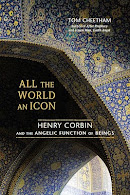
I suppose it was inevitable & I have mixed feelings about it. It does make access to information about Corbin easier, but I hope it will not decrease the quite small amount I make every year in royalties and the somewhat larger amount that my publisher uses to try to stay in business. So I hope that those readers who are introduced to Corbin in this way may also buy the book. In any case here is the Scribd link. This scanned version does not contain the Index or the Bibliography, which is too bad. Also I will provide the link to the list of errata for this book which somehow crept into the final version - a couple of them are important. [Despite what amazon.com seems to think, this book is still in print and available through the publisher. I'll get amazon straightened out soon.]

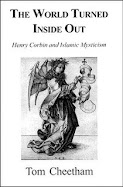
(I might add, since a few people have asked over the years, that the cover image of the Angel Gabriel by Martin Schongauer is a reference to the great importance that the German mystical and hermeneutic tradition had for Corbin. The original subtitle for this book, and one which I still prefer, was "Henry Corbin and the Angelic Function of Beings.")

Thursday, December 3, 2009

Robert Duncan & Henry Corbin cont'd


Continuing with my erratic searches for the early recognition of Corbin among American poets (which will eventually get organized & gathered in an essay) - The following passage is from pp. 73-4 of Robert Duncan's as yet unpublished H.D. Book (to be published by the University of California Press in 2010). This marks the earliest mention of Corbin in that text. It is from Chapter 5: Occult Matters, which first appeared in Stony Brook 1 in the Fall of 1968. I have not even begun an exhaustive search for Corbin references in Duncan's work & may not have the time or energy to do that, but I would appreciate help from anyone who knows Duncan's opus in at least finding the earliest references he makes to Corbin. (I hope to have some information soon from Lisa Jarnot, Duncan's biographer.)

"In the beginning I heard of guardian angels and of genii, of vision in dreams and truth in fairy tales, long before Jung expounded the gnosis or Henri Corbin revived and translated the Recitals of Avicenna. For these ideas were properties not only of the mind above, the high thought of Neo-Platonists or of Romantic poets, but they were lasting lore of the folk mind below too, wherever old wives told their tales. Gossip had brought rumors of the divine wisdom into American folk ways. From the popular movement of nineteenth century American spiritualism, where witch tradition out of Salem, shaman rite out of the world of the American Indian, and talking in tongues or from the spirit out of congregations of the Holy Ghost in the Protestant movement, mingled to become an obsession at large, so that in the last decades of the century in town and in the country groups met to raise the dead at rapping and levitating tables, new affinities with more ancient mystery cults of spirit and of a life beyond life were awakened. The theosophy of Plutarch, Plotinus and Pseudo-Dionysius the Areopagite, the hermeticism of Pico della Mirandola, or The Light of Asia and the Bhagavad-Gita, joined in the confusion of texts and testimonies of libraries that could include accounts written by trance-mediums of travel to past time or far planets, manuals of practical astrology and numerology, or Max Heindel’s The Rosicrucian Cosmo-Conception, 'Its Message and Mission: A Sane Mind. A Soft Heart. A Sound Body.' "

William Blake - from the Book of Job, When the Morning Stars Sang Together.

Wednesday, December 2, 2009

Charles Olson & "Ismaeli muslimism"


This rather remarkable piece is Charles Olson's "Plan for a Curriculum of the Soul" (1968) as it appears in Rothenberg & Joris, Poems for the Millennium Vol 2, 410-11. Olson's entire "plan" was published as A Plan for a Curriculum of the Soul, Buffalo: Institute of Further Studies, 1968. 22 pp. On the left hand page we find "Ismaeli muslimism" and "the Norse & the Arabs". We know that Olson had read Corbin's "Cyclical Time in Mazdaism and Ismailism" (in English in 1957) by October 1961 when he wrote "Maximus, at the Harbor." By 1968 when this piece was composed he had also read Avicenna and the Visionary Recital (in English in 1960) which he bought in Buffalo in 1965.

Tuesday, December 1, 2009

More on J.G. Hamann


A bit more than halfway through David Bentley Hart's review of Thomas Oden's The Humor of Kierkegaard I was surprised and delighted to find a wonderful and fairly extended discussion of J.G. Hamann, who has been mentioned here more than once as a major influence on Corbin. In his review, The Laughter of the Philosophers, (First Things, Jan 2005) Hart writes,


"Johann Georg Hamann (1730-88) is, by any measure, an obscure figure, little known outside the exclusive circles of a certain very rarefied kind of scholarship, hardly read at all even in his native Germany, and perhaps truly understood by next to no one. And yet it would be difficult to exaggerate not only the immensity of his influence upon all the great European intellectual and cultural movements of his age, but his continued significance for philosophers and theologians. A friend (and antagonist) of Kant’s, an inspiration to Herder and Jacobi, read and admired by the likes of Goethe, Schelling, Jean Paul, and indeed Kierkegaard, he is the only figure to whom Hegel felt it necessary to devote a long monograph. Today, however, his importance is scarcely a rumor even to the very literate, and the best known book about him in English is a ghastly, feeble, and imbecile squib by one of the twentieth century’s most indefatigably fraudulent intellectuals, Isaiah Berlin. [he is referring to Berlin's Magus of the North - TC] The young, gifted scholar John R. Betz, of Loyola College in Baltimore, is due soon to produce what promises to be the definitive appreciation of Hamann in English, which may go some small way towards reviving interest in this miraculous man; but, at present, he remains all but forgotten."

Since this was written, Betz's book has appeared: After Enlightenment: Hamann as Post-Secular Visionary. It is the only book on Hamann in English besides Berlin's (& I share Hart's opinion of that tome though I hope I wouldn't be quite so unkind). I highly recommend Hart's entire review (and his books as well - he is an erudite and most interesting theologian of the highest caliber).

Monday, November 30, 2009

On the Meaning of Music in Persian Mysticism by Henry Corbin


On the Meaning of Music in Persian Mysticism  


Henry Corbin


(Introduction given at le cité Universitaire May 19th 1967, on the occasion of an evening of Persian  music, poetry and  dance.  L'Iran  et la Philosophie, Fayard 1990. This translation appeared in Temenos 13, 1992)


I would like to suggest, in a few pages, how I see the fact that among all the forms of mysticism our science of religions has made known to us, Persian mysticism is notable as having always tended towards musical expression, and as never having found its complete expression otherwise than in that form. The part played by music in Islamic countries has not, over the centuries, followed the same course as in the West; doubtless because those who condemned its use saw in it in nothing more than a profane diversion. By contrast, what our mystics have produced is in the nature of an equivalent of what we call sacred music; and the reason for this is so profound that, rightly understood, all music, provided it be devoted to its supreme end, cannot be seen as other than sacred music. But is that not another paradox?


I believe that every Iranian must remember, more or less, the famous prologue to Jalaloddin Balkhi Rumi's Mathnawi, more often known in Iran as Mawlânâ. This prologue perhaps serves to justify the paradox I have just stated. Of this I have been convinced by the recent discovery, in the course of my researches, of an eminent Iranian thinker, at present almost unknown to the general public, but who deserves, when the time comes, I truly believe, to figure in our anthologies of the history of philosophy and spirituality - I mean the 17th century Qazi Sa'id Qommi. In one of his great works, still in manuscript, this philosopher recalls, and comments at length on certain propositions of one who is equally dear to Iranian hearts, the first Imam of the Shi'ites, Mawlana 'Ali ibn Abi Talib. According to this tradition the first Imam said one day, in the presence of his friends, 'Because in  my heart there were anguishing cares which I was unable to find anyone in whom to confide, I struck the ground with  the palm of my hand and confided my secrets to it, so that every time a plant germinates from the earth, that plant is one of my secrets.'


This is not a question, to be sure, of some secret of rural economy. The earth of which he speaks is not the earth under our feet and which is today in process of being devastated by the ambitions of our inordinate conquests. It is the 'Earth of Light' perceived only with the eyes of the heart. But it is for us - for each of us - to behold that Earth with eyes capable of seeing it and, so beholding it, to ensure that the 'Earth of Light' still matters to us, concerns us too. It depends on ourselves whether (striking the ground of that Earth of Light with the Imam) we see emerging certain plants which reveal to us our scarcely suspected secrets. And occupying a pre-eminent place among these plants the philosopher Qazi Said Qommi names the reed from which the mystic flute is cut, whose lament is breathed in the prologue of the Mathnawi, and of which we know that it is associated with the religious services of the Mawlana Order.


We have all heard chanted at least a few verses of that prologue:


Listen to the story told by the reed flute, of the partings whose lament it breathes,
Since I was cut from the reed-bed my plaint has made both men and women mourn their lot.
Whoever is parted far from his native place longs to return to the time of union.
My secret and my plaint are one, but both eye and ear lack light.
Body is not veiled from soul, nor soul from body; yet none is permitted to see the soul.
The sound of that flute is not a breath of wind, it is fire! He who has not that fire, let him be nothing!


Certainly no-one has seen the soul with the eyes with which we normally perceive the things of this world. Only the lament of the mystic flute cut from the source, from the Earth of Light, can give some premonition of it. All that grows from that Earth and is separated from it, the story of exile and return, this it is that haunts the mysticism of Persia, something which can neither be seen nor proved by reason, which cannot be said or seen by direct vision, but of which musical incantation alone can give us a foretaste and make perceptible, insofar as it belongs to listening to music to make us suddenly into clairvoyants.


The unsayable which the mystic seeks to say is a story that shatters  what we call history and which we must indeed call metahistory, because it takes place at the origin of origins, anterior to all those events recorded - or recordable - in our chronicles. The mystic epic is that of the exile, who, having come into a strange world, is on the road of homecoming to his own country. What that epic seeks to tell is dreams of a prehistory, the prehistory of the soul, of its pre-existenceto this world, dreams which seem to us a forever forbidden frontier. That is why, in an epic like the Mathnawi we can scarcely speak of a succession of episodes, for all these are emblematic, symbolic. All dialectical discourse is precluded. The global consciousness of that past, and of the future to which it invites us beyond the limit of chronology, can only attain musically its absolute character. In order to have their 'Holy Book', that Mathnawi which is often called 'the Persian Qur’an,’ the mystics are, essentially, obliged to sing in order to speak.


Such too is the structure of all those musical auditions which often, spontaneously, are improvised in Iran. The instrumentalist begins with a long prelude whose sonority continues to amplify. Then the human voice comes in, like a paroxysm, itself leading to deep
sonorities, to culminate in turn in a paroxysm of feeling and gradually towards silence. And the postlude, with which the instrument accompanies that silence, seems at last to lose itself like the arpeggio of a far light, that light whose new dawn all mystics await.


What is known as the Sama, the spiritual conceit, the oratorio, of course goes beyond the special case of the Mawlana and its Order. The whole story of Iranian Sufism is before us, certain severe Masters (puritans that is to say) holding the spiritual concert in suspicion, while - others, by contrast, practice it with the assiduity of a cult, from which each retains an overwhelming impression. Among the latter I would cite one example, a great twelfth-century Master, Ruzbehan Baqli Shirazi, compatriot of Hafez of Shiraz, whom he preceded by some two centuries and with whom he is linked by many affinities.


At the end of his life, however, we see Ruzbehan abstaining from the practice of listening to music: he no longer needed the intermediary of sensible sounds, the inaudible had become audible to him as a pure interior music. Thus his whole life exemplifies that structure of musical audition of which I have just spoken. To a friend who questioned him on the reason for his abstention, Shaykh Ruzbehan made this reply: 'Henceforth it is God in person who gives me his concert (or God himself is the oratorio I hear). That is why I abstain  from listening to anything other than He would make me hear (or any other concert than Himself).’


At the end of a lifetime's experience, when the ear of the heart, of the interior man, becomes indifferent to sounds of the outer world, at that moment it perceives harmonies which can never be heard by the man dispersed outside himself, torn away from himself by ambitions of this world. What the ear of the heart then perceives are the harmonies of the music beyond the grave which certain privileged ones have already perceived even in this world, rendering that opaque barrier transparent for them.


At his death a friend and disciple of Shaykh Ruzbehan remained especially inconsolable. For years, every morning, at dawn, they had made it a habit to chant alternately verses of the Qur'an. Such was the grief of the lonely friend in Shiraz that he used to go and sit at the head of the tomb and there to begin, alone, the chanting of the Qur'an. But one day, as dawn came, it came to pass that the voice of Ruzbehan made itself heard from the invisible, from one world to the other, or rather the two friends took up again, in the same interworld, the antiphonal chanting of the Qur'an. And so it continued each day, at dawn, until the friend confided in one of his acquaintance. 'From that time,' he said, 'I no longer heard the voice of Ruzbehan.


This, as if to suggest that, if the mystic must sing in order to speak, if the meaning of the mystic is essentially musical, this meaning remains incommunicable. From the moment we have the temerity to communicate, to reveal the fugitive instant when 'the soul becomes visible to the body', then that secret is lost to us.


Therefore I wish to say no more. But I would hope, in conclusion, that this sacralization of music by Persian mysticism may help us to some presentiment of the meaning of a 'beauty' which arouses in the modern world a veritable fury of denial and destruction. I would hope that we may perceive the significance and the permanent presence of an art which is not a province of fashion. The work of a Mawlana, like that of a Ruzbehan and many more besides, which illustrates the spiritual history of Iran is, every time, essentially the expression of a personality whom we shall not find twice among men. To whoever, then, has truly understood, it will never occur to suppose that they have been 'superceded'.


Translated by Kathleen Raine


Dervish blowing horn1600-1650,  Safavid period  Probably Isfahan, Iran  F1953.18


Friday, November 27, 2009

Henry Corbin Facebook Page(s)


There seem to be three such groups:

Henry Corbin - with 266 members.

Henry Corbin - with 145 fans.

Henry Corbin - with 6 members.